

Why Pergola Connections Fail When the Hardware Is Treated as an Afterthought
Pergola connections need to suit the wood, the loads, and years of outdoor exposure. They should also be accessible enough to inspect as the structure ages. Choosing hardware and fasteners early gives the builder time to check those requirements before assembly.
In exterior timber work, the connection strategy should be designed for weather, movement, and inspection from the start. A joint that is hidden, under-specified, or difficult to access can become a maintenance problem later, especially when the structure is exposed to moisture, wind, and seasonal expansion and contraction. Builders who think ahead usually avoid the most frustrating failures: loose fasteners, misaligned members, and concealed deterioration.
Tuff Fabrication approaches this problem from a structural hardware perspective. The point is not just to hold wood together. The point is to create a connection that can be trusted, checked, and maintained without unnecessary guesswork. That is especially relevant when the pergola will remain visible, open to the elements, and in service for many seasons.
The Case for Exposed, Inspectable Connections
Open-air structures reward honesty. If a joint can be seen, it can usually be checked. If a connection is easy to inspect, it is easier to maintain on a reasonable schedule rather than waiting until movement becomes visible from across the yard. That practical advantage is one reason builders favor exposed connection hardware in pergolas and similar timber assemblies.
A well-planned exposed connection does three things at once:
- It gives the joist or rafter a defined bearing seat.
- It creates a repeatable fastening pattern for installation.
- It keeps the hardware available for visual inspection over time.
That third point is often underestimated. Outdoor structures rarely fail all at once. More often, they change slowly. Timber swells, dries, shifts, and settles. Fasteners can loosen. Water can accumulate in small pockets. A connection that is accessible makes those changes visible before they become structural concerns.
What Visual Inspection Actually Solves
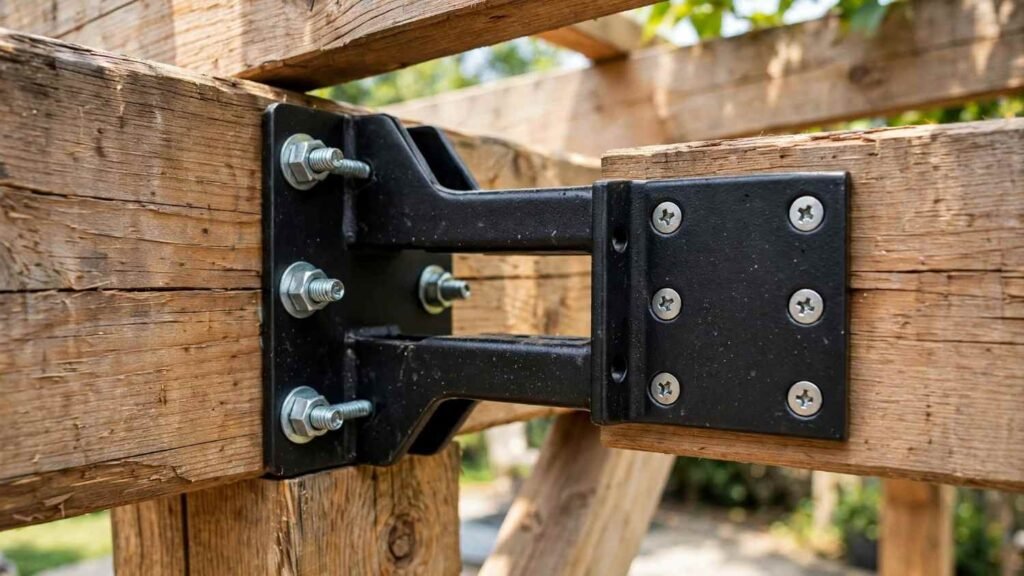
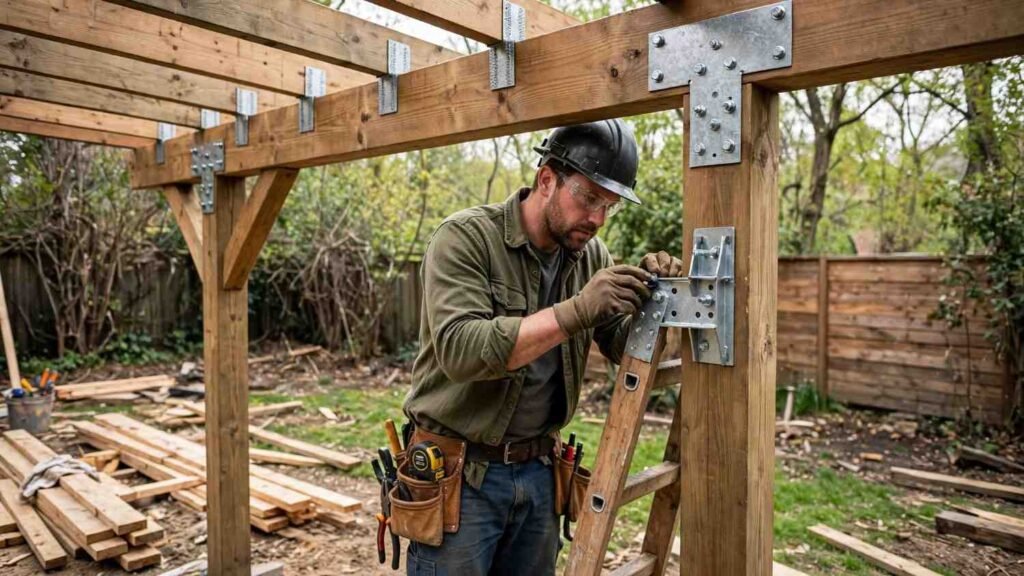
Inspection is not just a code-box exercise. It is a practical tool for tracking whether the structure is behaving as intended. When a joist hanger or similar bracket remains exposed, an installer, owner, or inspector can verify:
- Whether the timber is still seated correctly.
- Whether fasteners appear secure and properly placed.
- Whether there is visible distortion, corrosion, or repeated movement.
- Whether adjacent framing has shifted enough to affect alignment.
That kind of access matters because outdoor structures are never static. Good hardware does not eliminate maintenance, but it makes maintenance realistic.
Why Heavy-Duty Steel Matters More Than Decorative Appearance
There is a difference between hardware that looks suitable and hardware that is structurally appropriate. In pergola construction, that difference becomes obvious over time. Light-duty clips and flexible connectors may be acceptable in less demanding situations, but outdoor timber assemblies benefit from more rigid hardware that can hold geometry without introducing unnecessary play.
This is where Tuff Fabrication’s approach stands out. Their heavy-duty steel brackets are intended for structural use, not just visual symmetry. A more rigid connector helps maintain the relationship between joists, rafters, beams, and ledger points. That rigidity supports a cleaner build and reduces the chance that the connection itself becomes the weak link.
The goal is not overbuilding for its own sake. It is choosing hardware that matches the job. Pergolas are exposed, sometimes large-span, and often highly visible. The connection should be able to handle gravity loads, wind-related movement, and long-term outdoor exposure without relying on hidden forgiveness from the rest of the frame.
One-Component Thinking vs. System Thinking
Some builders shop for a single part and assume the problem is solved. That can work in a simple indoor framing situation, but pergola design is more like a system. The beam, joist, rafter, and bracket all affect one another.
One-product thinking asks, “Will this hanger fit?”
Combined-product thinking asks:
- Does the hanger create a reliable bearing seat?
- Does it support the fastening pattern I need?
- Does it leave enough access for later inspection?
- Does it complement the rest of the visible framing?
That shift in perspective is useful. It explains why pergola joist hangers are not just an attachment detail. They are part of the structural logic of the build.
Planning the Fastener Schedule Before the Framing Goes Up
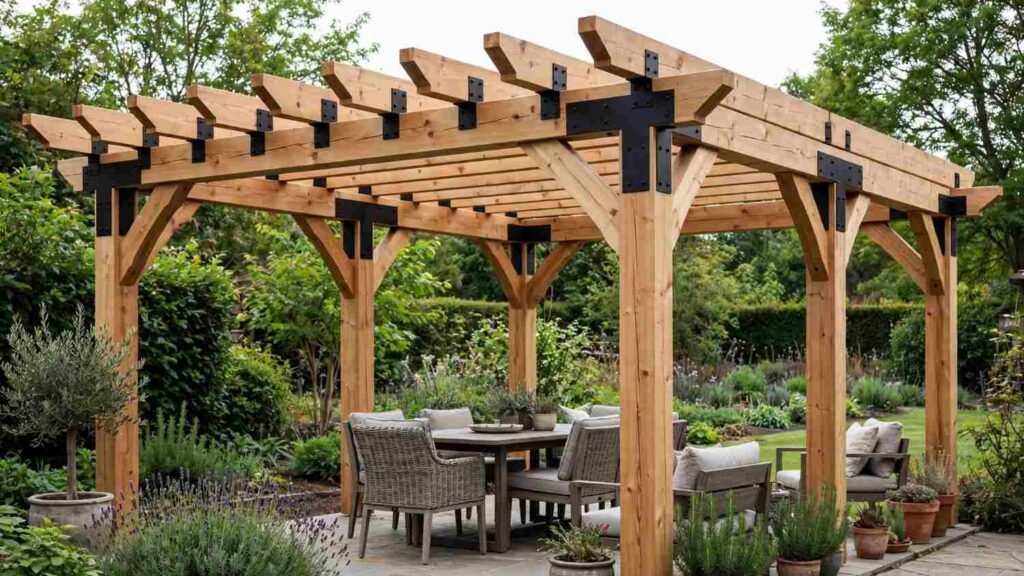
A good connection is rarely improvised on the jobsite. The best results come from planning the fastener schedule before installation begins, especially when the pergola will be exposed and visible. If the hardware is installed first and the fastening plan is improvised second, the result can be awkward tool access, inconsistent seating, or missed opportunities to secure the joint properly.
Tuff Fabrication’s product design philosophy supports this kind of planning. Precision-cut holes and a practical layout make it easier to place fasteners with clear tool access and a consistent pattern. That sounds minor until you are on a ladder trying to secure repeated connections overhead.
A deliberate fastener plan should account for:
- The number of connection points in the frame.
- Tool clearance around each bracket.
- The order of installation so members seat cleanly.
- The ability to revisit the connection later if needed.
This is especially important in pergolas where the frame is often both structural and architectural. If the hardware is visible, the fastening pattern is visible too. Clean planning protects both the performance and the appearance of the project.
How Outdoor Exposure Changes the Way You Should Detail the Joint
Outdoor exposure changes everything about a joint. Sun, rain, humidity, and seasonal temperature swings all influence how wood and steel interact. A connection that seems fine on installation day may perform differently after repeated weather cycles. That is why connection design should anticipate movement rather than pretend it will not happen.
The most useful response is not to hide the hardware. It is to choose a connection that remains understandable in service. An accessible bracket makes future review easier and supports a practical maintenance routine. If the joint remains visible, it is easier to confirm whether the timber has shifted, whether fasteners remain secure, and whether the hardware is still working as intended.
Tuff Fabrication’s outdoor hardware philosophy fits that reality. The aim is durable structural attachment with clean visibility, not a sealed-off detail that becomes mysterious after a few seasons. That matters to builders who care about workmanship as much as initial appearance.
Practical Questions Worth Asking During Design
Before the first cut, it helps to ask a few direct questions:
- Will this connection still be visible after the project is finished?
- Can someone inspect it without dismantling the assembly?
- Does the bracket support the timber in a predictable position?
- Is the layout forgiving enough to make future maintenance realistic?
These are the questions that separate a temporary-looking assembly from a durable one. They also keep the project focused on service life, not just initial assembly.
Choosing Hardware That Supports Both the Build and the Review
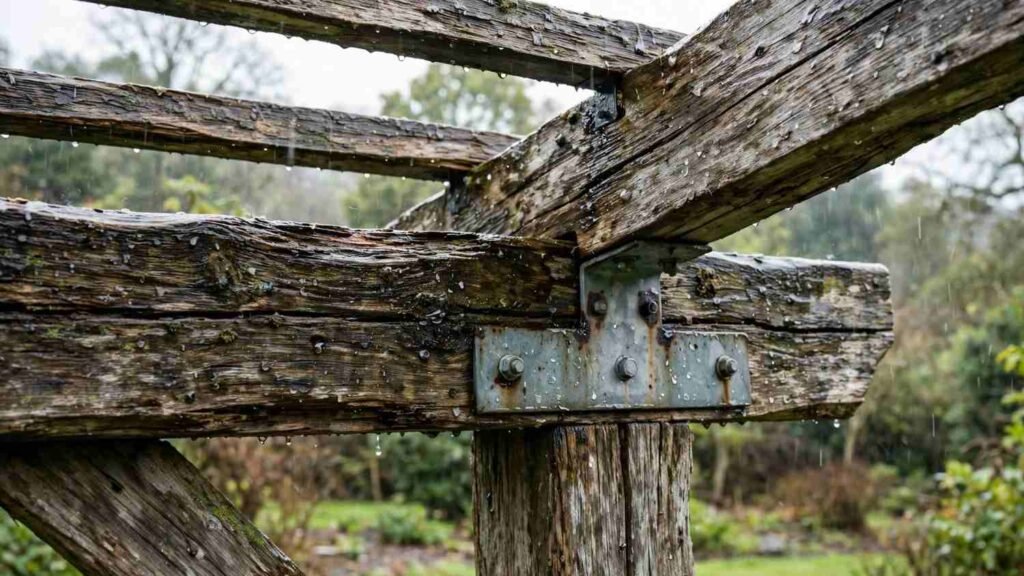
Hardware selection should do more than satisfy the moment of installation. It should also support the future condition of the structure. That is the real value of using dedicated steel connection hardware in pergola work. It creates a stable, repeatable joint while preserving the ability to review that joint later.
For builders and owners alike, that dual purpose is the right standard. The connection should be strong enough to anchor the framing and transparent enough to inspect. That means using a bracket style that seats the member positively, keeps the geometry tidy, and does not bury the condition of the joint behind decorative concealment.
If you want to see how that approach translates into a real product, Tuff Fabrication offers pergola joist hangers designed for this kind of outdoor connection work. The value is not just in the part itself. It is in the way the part supports the larger goals of reliability, visibility, and straightforward upkeep.
For pergolas, that combination is hard to beat. The best connections are the ones that still make sense after the structure has spent years in the weather.
The Long-Term Standard for Exterior Timber Work
A pergola should age with dignity. That requires more than attractive lumber and careful spacing. It requires connection details that stay stable, remain inspectable, and support sensible maintenance over time. Proper drainage, ventilation, and moisture-resistant materials can also help reduce mold growth around timber joints, protecting the structure from moisture-related deterioration. That is the strategic advantage of planning for outdoor exposure and future inspection from the beginning.
Tuff Fabrication’s structural hardware philosophy reflects that standard well: strong steel, practical access, and a clean architectural finish suited to exposed timber framing. If you are designing a pergola to last, the right question is not only how the joints look today. It is how well those joints will still be understood five years from now.
Build for that future, and the entire structure becomes easier to trust.