




A combination of physical observation and professional spinal alignment tracking is necessary to ensure that your musculoskeletal system is fully protected over the years. It is a huge error for any individual to depend on temporary relief or assume a minor spinal curve will remain stationary. Early stages rarely present noticeable signs; therefore, your long-term spinal stability, including muscle and joint integrity, can be silently compromised without proper intervention.
Smart auto accident chiropractor practices and progressive structural tracking necessitate an individual to own their spinal health by getting acquainted with their physical progression risks.
Key Takeaways
- Initial minor spinal curvatures rarely protect adjacent muscles from compensatory strain over time.
- Proactive tracking dramatically decreases long-term skeletal risks by providing early postural warning signs.
- Comprehensive postural management guards your physical capabilities against severe degenerative impacts.
- Meticulous routine documentation accelerates treatment planning accuracy during rapid growth phases.
How Does Scoliosis Change Over Time?
Clear structural boundaries exist within the body: an asymmetrical spine forces surrounding tissues to accept uneven workloads and altered load distribution. Digital mapping platforms now track curve progression to ensure prompt therapeutic adjustments.
Understanding biological growth patterns helps individuals maintain their active physical mobility rights. Progressive spinal twists require clear clinical strategies regarding brace options and core management. Postural conditions must be documented thoroughly via imaging before initiating structural rehabilitation. Routine monitoring intervals dictate how clinical teams respond to sudden skeletal changes.
Assessing your physical alignment is a critical aspect of holistic wellness tracking. Assessing your shoulder alignment, hip balance, and rib symmetry improves your immediate mechanical environment. As you assess the holistic physical security of your torso, one measure of great importance is securing a professional orthopedic evaluation.
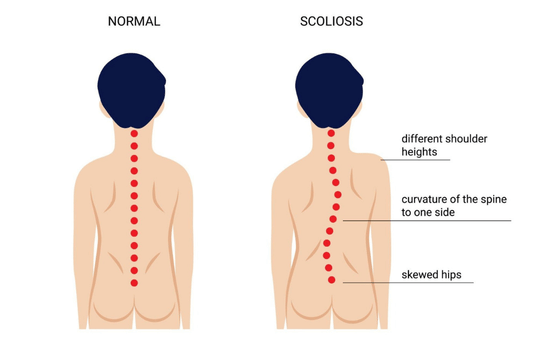
Visual comparison of spinal alignment and structural asymmetries caused by scoliosis. Source: Evheniia Vasylenko / Getty Images
This type of early proactive assessment will be highly instrumental in ensuring the preservation of your mobility and your body’s resilience in case the curve begins to rapidly advance. With both physical awareness and tracking measures implemented, there is no need to fear minor physical limitations because you have a proactive baseline defense line.
Patients who ensure all these diagnostic considerations are met face far less disturbance should sudden shifts happen. Recent clinical figures show that untreated progressive curves can increase by over one degree per year during high-growth cycles.
How Do Postural Changes Advance Musculoskeletal Pain?

Unchecked spinal curvature compromises physical alignment by causing joint irritation, uneven muscle strain, and chronic neural compression. By shifting management from being purely reactive to proactive, structured therapies give individuals the ability to limit structural fatigue before severe symptoms worsen.
- Asymmetrical alignment offers visible imbalances that transfer directly to everyday posture profiles.
- Compensatory muscle pulling patterns trigger chronic fatigue near primary support zones instantly.
- Intelligent nerve paths send localized discomfort alerts during prolonged static positions.
- Imbalanced physical stress coordinates premature joint wear while individuals walk or exercise.
- Inefficient loading limits spinal flexibility before standard stretching movements happen.
- Altered skeletal baselines alter natural walking gait through simple structural shifts.
- Overworked back muscles experience intense exhaustion even when standard tasks are performed. Incorporating the best exercises for lower back strength into a regular fitness routine can help improve spinal support, reduce muscle fatigue, and promote better posture and overall back health.
Knowing about progression metrics helps one avoid a lot of anxiety should discomfort escalate into adjacent muscle groups. The cost implications of letting a severe skeletal curve advance due to neglect cannot be overstated since mechanical strain will escalate fast, hence the need for structural monitoring.
Many individuals mistake minor initial comfort for long-term safety, assuming mild curves protect individual joints from future degeneration. The natural flexibility that youth provides does not extend indefinitely beyond skeletal maturity; therefore, the joints, discs, and nerves remain exposed. Knowing about these clear-cut developmental lines will change your perspective on securing your physical health in the future.
Which Specific Strategies Prevent Severe Mobility Limitations?
- Spine configurations should be examined regularly via visual exams for uneven shoulder heights.
- Immediately notify your care team if you discover persistent rib asymmetry or back fatigue.
- The muscular system supporting the core should remain active to prevent imbalance pooling during movement.
- Ergonomic work layouts should be checked to see whether there is any risk of bad posture habits.
- Be familiar with the dynamic threshold values that mark mild, moderate, and severe curve categories.
- The overall physical routine should keep activity steady, especially during major lifestyle changes.
How Do Progression Frameworks Limit Structural Risks?
| Progression Class | Primary Physical Focus | Standard Structural Impact | Key Management Benefit |
| Mild Curvature | Initial asymmetry, muscle tone, flexibility | Core alignment stability, skeletal balance | Full physical capacity preservation |
| Moderate Curve | Disc wear, nerve space, compensatory pain | Intervertebral changes, pelvic tilts | Targeted physical therapy & bracing |
| Severe Curvature | Chest wall space, lung capacity volume | Internal rib cage compression, stamina drops | Advanced stabilization & lung care |
Critical Progression Note: Skeletal maturity reduces but does not completely eliminate the risk of curvature advancement; adult curves greater than 50 degrees can continue to worsen due to gravitational forces and natural disc wear.
How Can Group Networks Support Postural Awareness?

- Educational wellness networks share immediate updates regarding local screening resources effectively.
- Shared digital school platforms allow physical educators to note early structural imbalances.
- Regular family wellness discussions foster collective awareness about hereditary spine conditions.
- Targeted fitness groups help peers monitor posture forms during strenuous training hours.
- Community screening programs reduce unmanaged progression rates through consistent visibility.
- Sharing posture self-check guidelines ensures rapid identification during early developmental years.
- Patient feedback networks drive healthcare facilities to upgrade aging pediatric imaging technologies.
Establishing precise physical management parameters guarantees long-term skeletal stability and life predictability. Modern structural health depends on clear communication channels between individuals and clinical tracking networks. Identifying hidden biomechanical imbalances protects personal mobility from catastrophic joint failures during sudden physical challenges.
Modern spinal health demands active participation in tailored alignment exercises and structural progression tracking. Annual review of diagnostic images guarantees that your protective physical measures meet evolving structural requirements. In the end, consistent care from an auto accident chiropractor makes an initially vulnerable spine strong and withstands structural surprises over time.