





For years, I thought eating well meant paying attention to numbers, calories, macros, steps, and streaks. It worked for short bursts, but it never lasted. What finally changed my relationship with food wasn’t more discipline or a better app. It was realizing that long-term health depends far more on what patterns you repeat than what you track.
Once I stopped trying to micromanage every meal and focused on food quality, consistency, and how my body actually felt day to day, everything became simpler. Energy stabilized. Cravings softened. Meals stopped feeling like decisions I had to “get right.” The biggest surprise was that these changes weren’t extreme. They were practical, repeatable, and realistic enough to stick.
Why Long-Term Health Improves Without Tracking?
Most people don’t quit healthy eating because it doesn’t work. They quit because it’s exhausting. Tracking creates friction, and friction kills consistency. Long-term health improves when your diet runs on defaults rather than decisions.
Research consistently shows that shifting away from highly processed, nutrient-poor foods toward whole-food eating patterns supports longevity. Studies suggest that sustained dietary changes can increase life expectancy by 8–13 years when adopted earlier in adulthood and still meaningfully extend life even when started later. The takeaway is simple: perfection doesn’t matter. Repetition does.
Prioritizing Plant Proteins Without Going Extreme
One of the most impactful changes I made was quietly reducing red and processed meat. Not eliminating it completely, just no longer centering meals around it.
Plant proteins like beans, lentils, peas, and nuts became the default instead. Over time, this shift naturally increased fiber intake, improved digestion, and made meals more filling without heaviness. Research links high intake of animal protein, especially processed meat, with increased cardiovascular risk, while plant protein is associated with lower all-cause mortality.
You don’t need labels or tracking to do this well. A simple rule works: most meals are plant-forward, some meals mixed, occasional meals indulgent.
Focusing on Carbohydrate Quality, Not Quantity
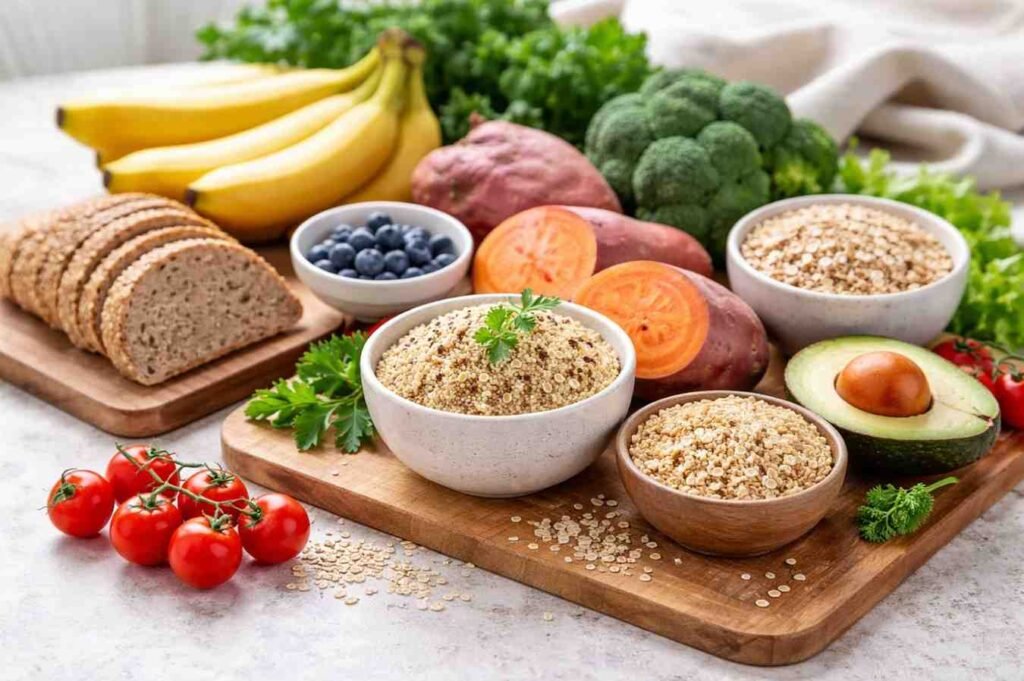
Carbs weren’t the problem. The type of carbs was.
Refined grains like white bread and white rice digest quickly and don’t offer much staying power. Swapping them for whole grains, oats, brown rice, quinoa, and barley made hunger far more predictable. Whole grains deliver fiber that supports gut health, blood sugar stability, and long-term heart health.
Instead of counting grams, I started using a visual cue: if it still looks close to its original form, it’s probably a better choice.
Eating More Fruits and Vegetables Without Forcing It
Most guidelines recommend at least five portions of fruits and vegetables daily, but that number feels abstract until you build meals around color instead of portions.
What worked for me was anchoring meals with vegetables first, not as a side but as a base. Roasted vegetables, salads with real substance, fruit added to breakfast instead of saved for “later.” Over time, this naturally increased antioxidant and polyphenol intake, helping reduce inflammation and support long-term cellular health.
Variety mattered more than volume. Different colors brought different benefits, and meals became more satisfying as a result.
Switching to Healthy Fats That Actually Satisfy
Cutting fat entirely never made sense to me, especially once I understood the difference between saturated and unsaturated fats.
Replacing butter and processed fats with olive oil, avocados, nuts, seeds, and oily fish made meals more flavorful and more filling. These unsaturated fats support heart health and reduce inflammation when used consistently. Saturated fat didn’t need to disappear it just stopped being the default.
This single shift reduced the urge to snack later, which mattered more than any number on a screen.
Cutting Back on Sugar and Salt Without Obsession

Sugar and salt weren’t eliminated. They were de-emphasized.
Sugary drinks were the easiest win. Removing sodas and sweetened teas alone can significantly reduce early mortality risk. Water became the default, not a rule. Salt followed a similar pattern: cooking more at home naturally lowered intake without measuring teaspoons.
Instead of restriction, the approach was replacement. Once better options became normal, the old ones lost their grip.
Using Proven Eating Patterns as Flexible Templates
Structured eating patterns help some people, but only when treated as frameworks rather than rules.
Several evidence-based patterns consistently support long-term health:
- Mediterranean-style eating emphasizes fruits, vegetables, whole grains, nuts, and olive oil.
- DASH focuses on blood pressure control through reduced sodium and nutrient-dense foods.
- MIND blends Mediterranean and DASH principles with a focus on brain health.
- Blue Zones–style eating mirrors the habits of populations with exceptional longevity.
What matters isn’t strict adherence but borrowing the common threads: plants, whole foods, healthy fats, and moderation.
Making Diet Changes Stick in Real Life
Sustainability comes from small, repeatable actions. The most effective ones were surprisingly simple:
- Changing one habit at a time instead of overhauling everything
- Using smaller plates to naturally manage portions
- Eating a fiber-rich breakfast to stabilize hunger
- Paying attention to energy levels instead of food logs
Consistency beats intensity every time.
Frequently Asked Questions (FAQs)
1. Can diet changes really improve long-term health without calorie tracking?
Yes. Research consistently shows that improving diet quality, focusing on whole foods, fiber, and healthy fats, supports long-term health without the need for calorie counting.
2. What is the easiest diet change to start with?
Replacing sugary drinks with water is one of the simplest and most impactful changes, with clear benefits for long-term health and reduced disease risk.
3. Do I need to follow a specific diet like Mediterranean or DASH?
No. These patterns work best as flexible templates. Adopting their core principles is far more important than strict adherence.
4. How long does it take to see benefits from diet changes?
Some benefits, like improved energy and digestion, can appear within weeks. Long-term health improvements build gradually over months and years.
Final Thoughts
Long-term health isn’t built through perfect weeks of eating or rigid control. It’s built through patterns you can repeat on busy days, stressful days, and ordinary days. When food choices become defaults instead of decisions, healthy eating stops feeling like effort and starts feeling normal. The most powerful diet changes aren’t dramatic, they’re quiet, consistent, and forgiving enough to last.
If there’s one thing worth remembering, it’s this: you don’t need to track everything to support long-term health. You just need habits that work even when you’re not paying close attention.