



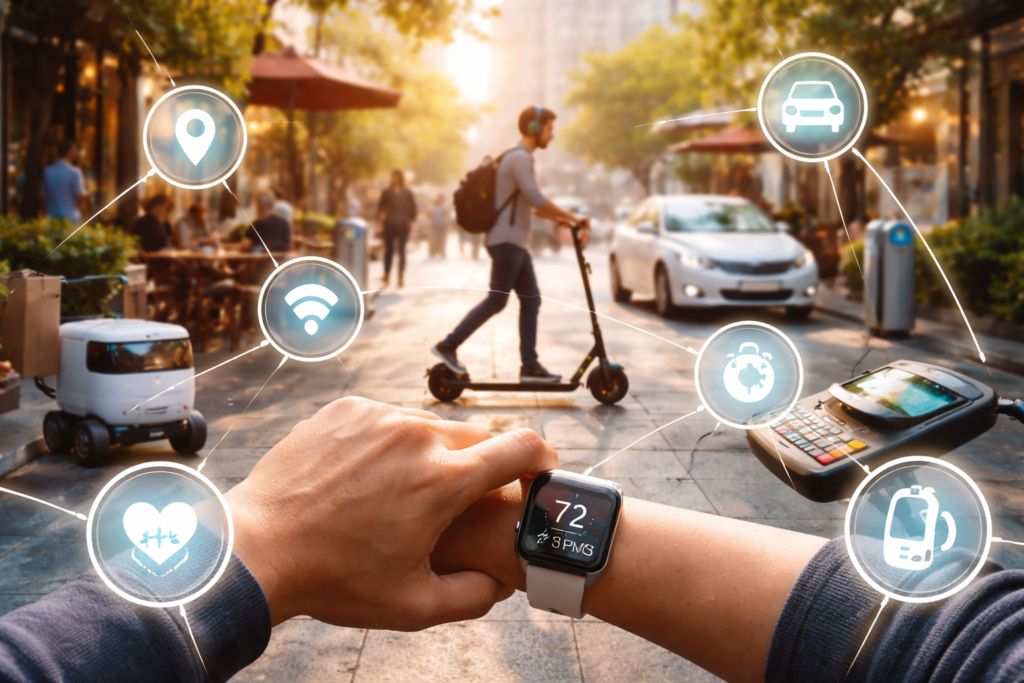
A few years ago, I used to associate the Internet of Things with novelty voice assistants turning on lights or refrigerators with touchscreens. Over time, I realized IoT had quietly moved far beyond living rooms and kitchens. It started showing up during everyday moments: a parking app saving me time in a crowded city, a wearable nudging me to move after sitting too long, or a traffic signal adjusting itself when roads got busy.
That’s the real story of IoT in daily life today. It isn’t loud or flashy anymore. It works in the background, using sensors, connectivity, and automation to make routine experiences smoother, safer, and more efficient. And most of the time, we don’t even think about the technology doing the work.
How IoT Fits Into Everyday Life?
At its core, IoT connects physical objects to the internet so they can collect data and act on it. A sensor detects something, the data moves through a network, and a system responds, often automatically. That same basic flow powers everything from health monitoring to traffic management.
What makes IoT especially relevant now is how seamlessly it blends into daily routines. You don’t need to understand the tech to benefit from it. You just experience fewer delays, better information, and more convenience.
Healthcare – Monitoring Without Constant Checkups
Healthcare is one of the clearest examples of IoT making a real difference. Wearable devices and connected medical tools track vital signs continuously instead of relying on occasional doctor visits. This allows people to stay informed about their health without disrupting their daily schedules.
Remote patient monitoring has become especially important for individuals managing chronic conditions. Devices can track heart rate, glucose levels, or blood pressure and share that data with healthcare providers automatically. Instead of reacting after symptoms worsen, doctors can spot patterns early and intervene sooner.
For everyday users, fitness trackers and smart health wearables also play a role. They provide insights into sleep quality, activity levels, and recovery, helping people make small but meaningful lifestyle adjustments over time.
Transportation – Smarter Commutes and Safer Roads
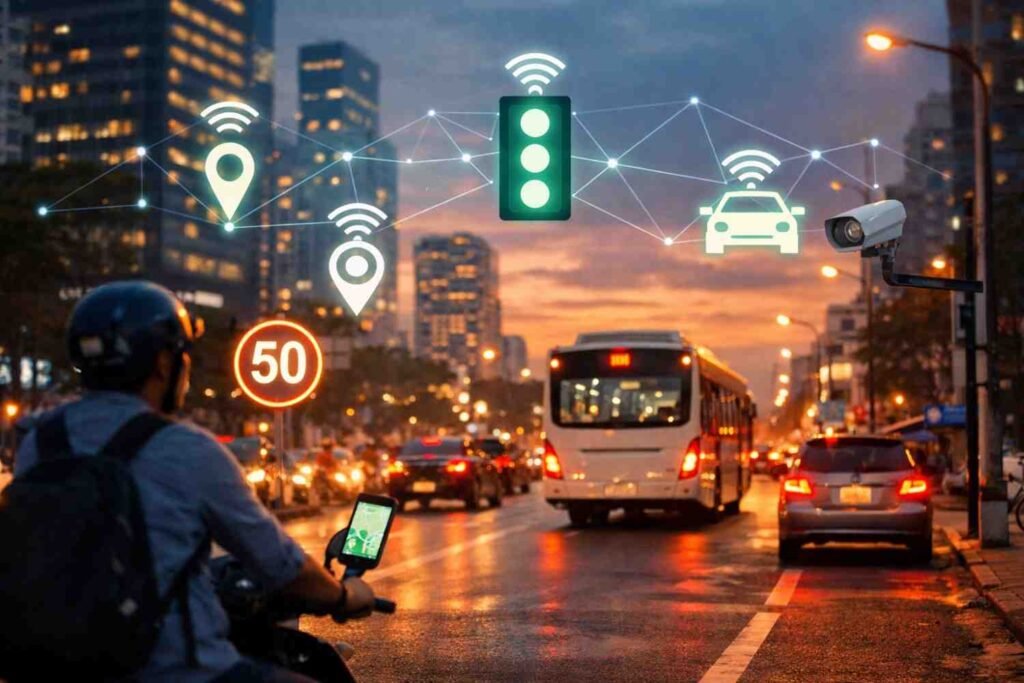
IoT has reshaped how people move through cities. Modern vehicles now function as connected systems, sharing data about performance, location, and road conditions. Software updates happen remotely, navigation adapts in real time, and drivers receive alerts before small issues become major problems.
Cities also use IoT to manage traffic more efficiently. Sensors and connected cameras feed live data into traffic systems that adjust signal timing based on congestion. Navigation apps rely on this same flow of information to suggest faster routes, saving time and reducing fuel waste.
Parking is another area where IoT quietly improves daily life. Smart parking systems detect available spaces and guide drivers directly to them, cutting down on frustration, emissions, and unnecessary circling.
Retail – Shopping Without Friction
Retail environments increasingly rely on IoT to remove friction from shopping. Some stores now use sensors and computer vision to track items as customers pick them up, allowing them to walk out without standing in line or scanning products.
Behind the scenes, IoT helps retailers manage inventory more efficiently. Smart shelves detect when products run low and alert staff automatically. This reduces out-of-stock situations and helps stores respond faster to changing demand without constant manual checks.
For shoppers, the impact feels simple: faster visits, fewer disruptions, and better product availability.
Smart Cities – Technology That Serves the Public
Cities have become living examples of IoT at scale. Connected infrastructure allows public services to respond dynamically instead of following rigid schedules. Streetlights adjust brightness based on activity, improving safety while conserving energy.
Waste management systems use sensors to determine when bins are actually full, optimizing collection routes and reducing unnecessary fuel use. Public transportation systems rely on connected data to provide accurate arrival times and improve reliability for commuters.
These systems don’t just improve efficiency; they improve trust. When services run smoothly and predictably, daily life feels less chaotic.
Utilities and Energy – Efficiency You Don’t Notice
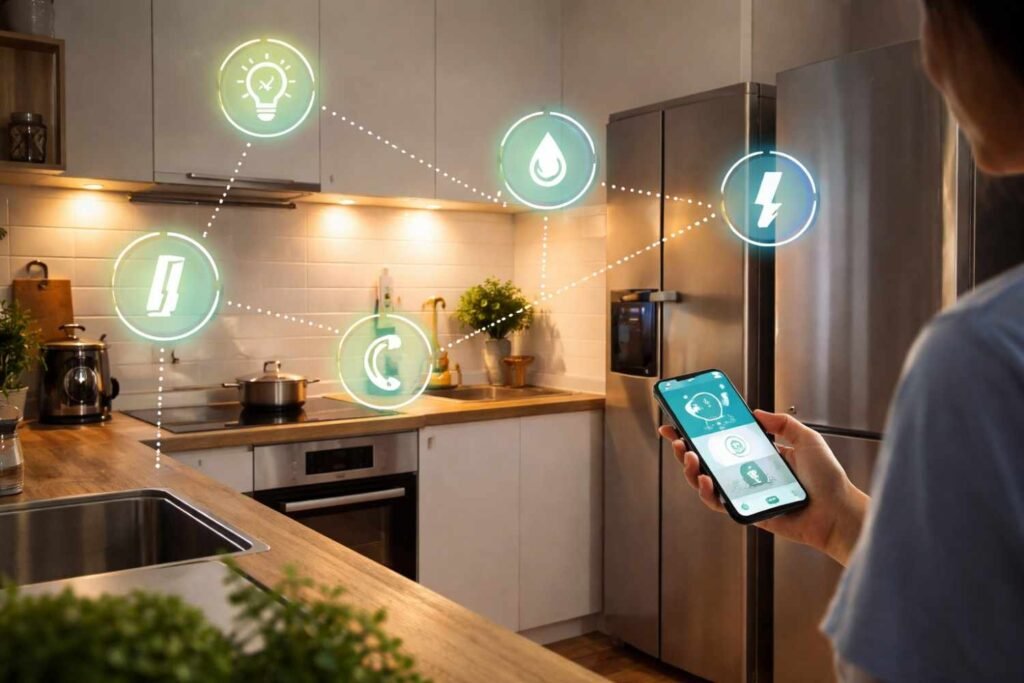
IoT also plays a quiet but powerful role in utilities. Smart meters track energy and water usage in real time, replacing estimates with actual data. This helps households understand consumption patterns and make informed decisions without extra effort.
On a larger scale, utility providers use IoT data to detect leaks, prevent outages, and balance demand. The result is fewer disruptions and more sustainable use of shared resources.
Common IoT Applications People Use Every Day
While many IoT systems operate invisibly, some are already part of daily routines:
- Wearable fitness trackers and health monitors
- Connected vehicles and navigation systems
- Smart parking and traffic management tools
- Automated retail checkout experiences
Each of these relies on sensors, connectivity, and automation working together to remove small inconveniences that add up over time.
Frequently Asked Questions (FAQs)
1. What are IoT applications in daily life?
IoT applications in daily life are systems where connected devices collect data and automate actions to improve convenience, safety, or efficiency in everyday activities.
2. Are IoT devices only used in smart homes?
No. While smart homes are common, IoT is widely used in healthcare, transportation, retail, utilities, and city infrastructure.
3. How does IoT help save time?
IoT reduces manual tasks and delays by automating processes like traffic control, parking availability, health monitoring, and inventory management.
4. Is IoT technology difficult to use for regular people?
Most IoT systems are designed to work in the background. Users benefit from them without needing technical knowledge or constant interaction.
Final Thoughts
IoT has moved past being a luxury or novelty. It now supports daily life in subtle but meaningful ways, from helping people manage health to making cities more livable. The most powerful thing about IoT isn’t the technology itself; it’s how quietly it improves routines we rely on every day.
As connectivity expands and systems become more refined, IoT will continue blending into the background. And that’s exactly where it works best.