





When I first asked myself What Is an ESA Cat, I was not looking for a trendy label. I was trying to understand whether my own cat’s calming presence had a real place in mental health support. The deeper I researched and spoke with professionals, the more clarity I gained about what this role truly means. In this article, I’ll break down what an ESA cat legally is, how to qualify, what rights apply, and what responsibilities come with it.
I did not want assumptions or internet myths. I wanted to understand how this actually works in real housing and legal situations.
At its core, the emotional support cat definition is simple. An ESA cat is a companion animal that provides comfort and relief to someone with a diagnosed mental or emotional condition. This is completely legal when supported by proper documentation, but it is often misunderstood.
Many sites explain the basics, but they rarely talk about what it feels like to rely on that bond daily. Living with an ESA cat is less about paperwork and more about stability. That is what made the concept real for me.
💡 Key Takeaways:
- Clear Legal Status: ESA cats are assistance animals under the Fair Housing Act, not pets, when supported by a licensed professional’s letter.
- Housing Priority: Most users searching this topic are primarily trying to secure housing rights in no pet properties.
- No Public Access: ESA cats do not receive ADA public access protections like service animals.
- Letter Over Registry: The ESA letter from a licensed mental health professional is the only document that carries legal weight.
- Bond Over Breed: Any cat can qualify, but temperament and emotional connection matter far more than breed labels.
ESA Cat Meaning in Everyday Life and Emotional Support Cat Definition

Understanding the ESA cat meaning changed how I viewed my relationship with my pet. I stopped seeing her as just a companion and started recognizing the emotional regulation she naturally provided. Her presence during anxious moments was not imagined, it was consistent and grounding.
When people ask for an ESA cat explained in plain terms, I tell them this. It is not about tricks or commands. It is about therapeutic comfort that helps manage conditions like anxiety, depression, or PTSD.
I noticed that when my stress levels rose, my cat would curl up beside me. That simple act slowed my breathing and reduced racing thoughts. Over time, I realized that emotional support cat benefits are often subtle but powerful.
Emotional Support Cat Benefits Beyond Comfort
Most articles I found focused heavily on legal rights but rarely discussed how those rights play out in real life. Very few truly explore the benefits of having an emotional support cat beyond surface explanations. They often skim over the daily impact. For me, the real transformation showed up in routines. Waking up to feed her gave structure to mornings that once felt overwhelming.
The emotional support cat mental health benefits became clear during difficult periods. Having something to care for pulled me out of isolation. That responsibility fostered purpose when I needed it most.
I also found that physical touch played a role. The rhythmic sound of purring created a calming sensory experience. It felt like a natural coping tool that did not require conscious effort.
ESA Cat vs Service Animal
One question I often hear is about ESA cat vs service animal differences. I once assumed they were the same. They are not.
Much of the confusion comes from misunderstanding the difference between service animals and emotional support animals, especially when it comes to legal rights and training requirements.
A service animal is trained to perform specific tasks for a person with a disability. An ESA cat provides comfort through companionship but does not perform trained tasks.
The legal distinction matters. Service animals have broader public access rights under disability law, while ESA cats are primarily protected under housing regulations.
ESA Cat vs Service Animal vs Therapy Cat
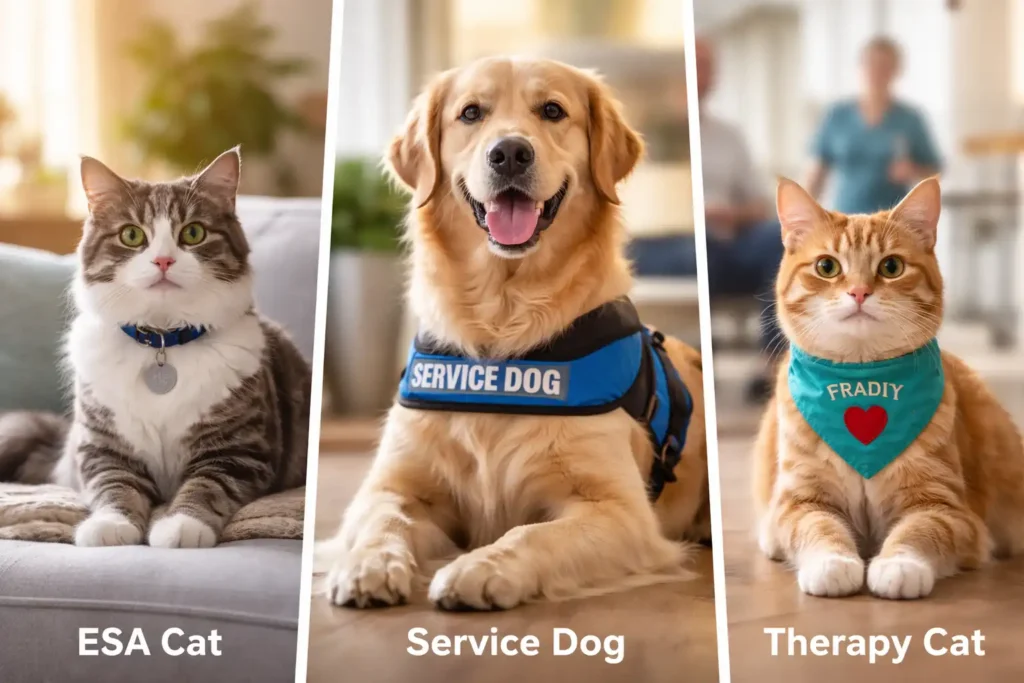
When I first researched this, the overlapping terminology confused me, especially when trying to understand the difference between therapy animals, emotional support animals and service animals. Seeing the distinctions side by side made everything clearer.
| Feature | ESA Cat | Service Animal | Therapy Cat |
| Species | Any (usually cats/dogs) | Only dogs or miniature horses | Usually cats or dogs |
| Training | None required | Must be trained for specific tasks | Socialization training |
| Public Access | No (housing only) | Yes (restaurants, stores, etc.) | Only where invited (hospitals) |
| Legal Basis | Fair Housing Act (FHA) | Americans with Disabilities Act (ADA) | No specific federal protection |
ESA Cat Protections and Laws Explained
I spent weeks reading about ESA cat protections and laws because I wanted clarity before taking any steps. Many articles list rules, but they do not explain how those rules apply in real life. That gap confused me at first.
I discovered that most ESA protections revolve around housing, not public access. The Fair Housing Act outlines how landlords must evaluate reasonable accommodation requests for qualified individuals. That protection was reassuring when I moved apartments.
Emotional support cat housing rights under FHA allow tenants to request reasonable accommodation even in buildings with no pet policies. Knowing this gave me confidence to have an open conversation with my landlord. It turned what felt like a conflict into a collaborative process.
What an ESA Cat Legally Means
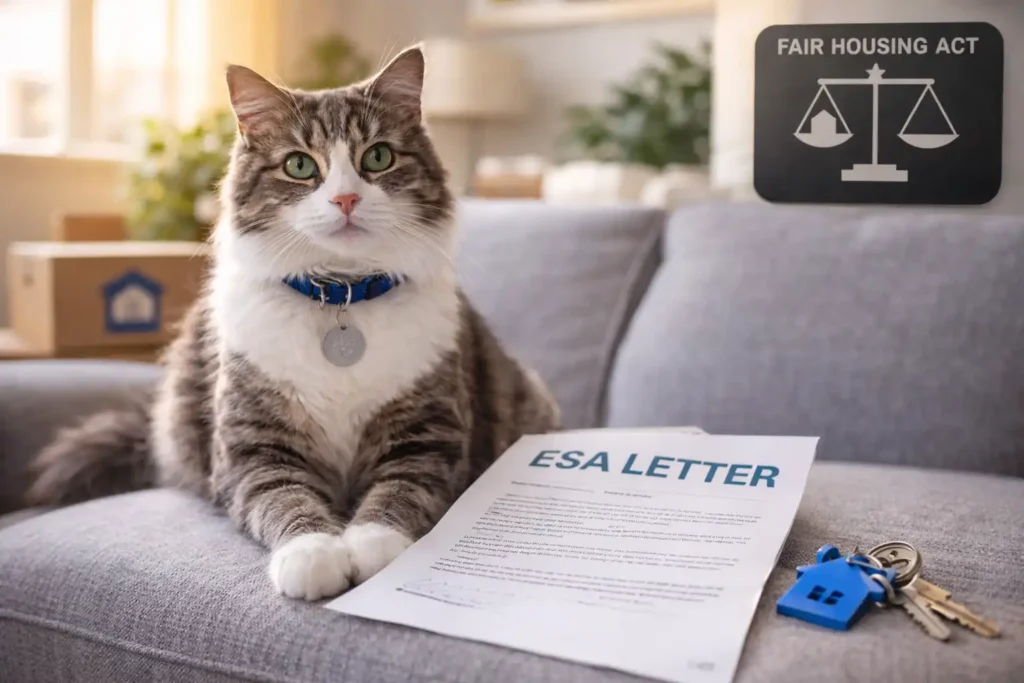
In practical terms, an Emotional Support Animal cat is treated as an assistance animal under the Fair Housing Act when supported by documentation from a licensed mental health professional. It is not legally treated as a standard pet in qualifying housing situations.
Housing Protections: With a valid ESA letter, landlords are generally required to provide reasonable accommodation and cannot charge pet rent or additional deposits. That distinction often surprises people who assume ESA status works like a pet policy exception.
No Public Access: Unlike service animals protected under the Americans with Disabilities Act, ESA cats do not have public access rights to restaurants, stores, or other restricted spaces. Their legal protections apply primarily to housing.
Travel Rules: Airlines are not required to recognize emotional support animals as service animals. Most carriers apply standard pet policies, which may include carrier requirements and applicable fees.
Are ESA Cats Allowed in No Pet Housing
Are ESA cats allowed in no pet housing? In many cases, yes, if you have proper documentation from a licensed mental health professional. That documentation supports your need for the animal as part of your treatment plan.
When I submitted my letter, I expected resistance. You may feel the same uncertainty the first time you approach a landlord. Instead, the process was straightforward because I approached it respectfully and prepared. That experience showed me how important it is to understand your rights clearly.
Housing protection does not mean unlimited freedom. Property owners can still deny requests if the animal poses a safety risk or causes significant damage, and practical living conditions, including issues related to the causes of cold floors in winter, can affect overall comfort for both tenant and pet. Responsible ownership matters just as much as legal status.
Do ESA Cats Have Airline Travel Rights
Another common question is Do ESA cats have airline travel rights. I researched this before planning a trip. The rules have changed in recent years.
Most airlines no longer recognize emotional support animals as service animals. That means they may treat ESA cats as regular pets with applicable fees and carrier requirements. This shift surprised many people, including me.
Traveling with my cat now requires advance planning, written confirmation from airlines, and realistic expectations. I check airline policies carefully and prepare documentation just in case. Staying informed avoids last minute stress.
How to Make a Cat an Emotional Support Animal
When I began exploring how to make a cat an emotional support animal, I quickly learned that websites claiming to help you register emotional support animal status are not the answer. There is no official federal registry for ESA cats. The key is medical documentation.
Qualifying for an ESA cat letter requires speaking with a licensed mental health professional. They assess whether an emotional support animal is part of your treatment plan. That evaluation is personal and not automatic.
How do I get an ESA letter for my cat? I scheduled an appointment with my therapist and discussed my symptoms openly. After assessment, she provided a signed letter on official letterhead outlining my need.
Why People Ask What Is an ESA Cat
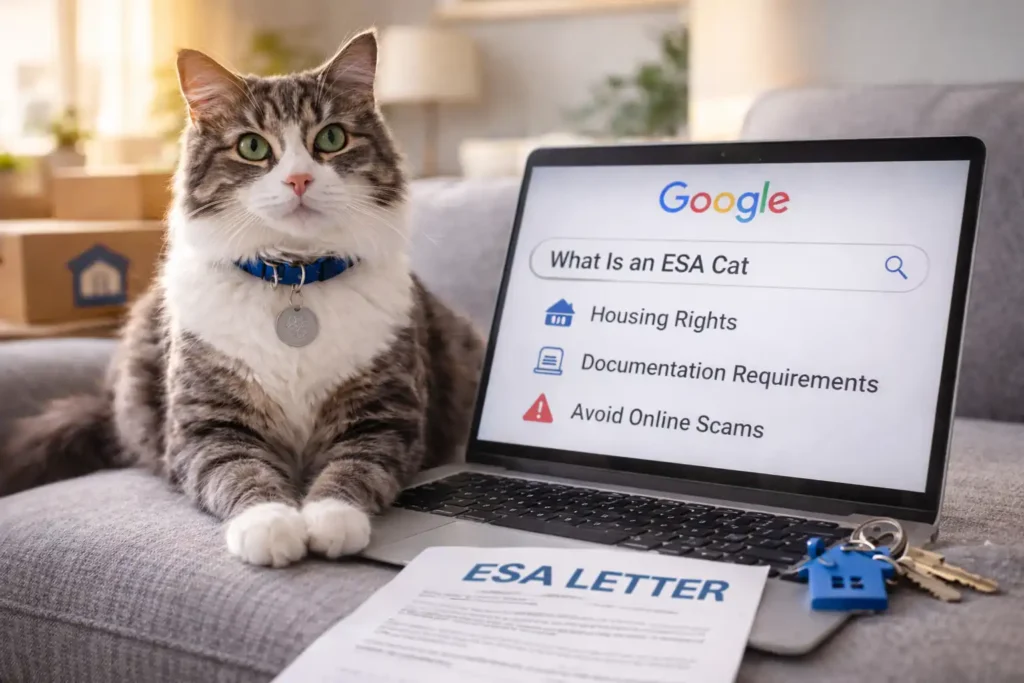
When people type What Is an ESA Cat into Google, they are usually not looking for a definition alone. Most are trying to figure out how to keep their cat in no pet housing or how to get a legitimate ESA letter.
The real intent behind the search usually comes down to three things:
- Housing rights
- Documentation requirements
- Avoiding online scams
Understanding that intent makes the process feel less overwhelming. This is why the question What Is an ESA Cat is often tied to housing security and mental health stability rather than simple curiosity.
What Qualifies a Cat to Be an Emotional Support Animal
What qualifies a cat to be an emotional support animal? The qualification lies more with the person than the pet. The individual must have a diagnosed mental or emotional condition.
The cat should have a temperament that is calm and manageable. Aggressive or unpredictable behavior can complicate housing or public situations. In my case, my cat’s steady demeanor made the process easier.
Can any cat become an emotional support animal? Technically yes, if the bond provides therapeutic benefit and documentation supports it. However, not every cat will adapt well to new environments or stress.
Popular Breeds Often Chosen for Emotional Support
While any cat can qualify, I noticed certain breeds are often chosen because of temperament. Ragdolls are known for their gentle and affectionate personality.
Maine Coons are calm and social, often described as gentle giants. Siamese cats bond deeply with owners, while Russian Blues are quiet and emotionally intuitive.
I learned that breed matters less than bond, but temperament can make daily life easier.
Does an Emotional Support Cat Need Training
Does an emotional support cat need training? Unlike service animals, formal task training is not required. Basic obedience and good behavior are still essential.
I worked on simple routines with my cat to ensure she responded calmly to new settings. That preparation helped when meeting landlords or traveling. Training may not be mandatory, but it improves quality of life.
The difference between ESA cat and therapy cat also matters here. Therapy cats typically visit hospitals or facilities to comfort multiple people. ESA cats focus on supporting one specific individual.
What Mental Health Conditions Qualify for an ESA Cat

What mental health conditions qualify for an ESA cat? Conditions often include anxiety disorders, depression, PTSD, and certain phobias. The specific diagnosis must be made by a licensed professional.
In my situation, anxiety was the primary factor. My therapist observed that my cat’s presence reduced panic episodes. That observation supported the formal recommendation.
Can an ESA cat reduce anxiety or depression? From my lived experience, yes. The companionship created stability that complemented therapy and other treatments.
Real Life Lessons I Learned
Competitor articles often focus heavily on legal definitions. What they miss is the emotional nuance of daily life. Living with an ESA cat is about consistency, not labels.
There were days when my anxiety spiked without warning. Having my cat nearby created a grounding anchor that words cannot fully describe. That sense of safety changed how I approached stressful situations.
I also learned that transparency is crucial. Explaining my need calmly and clearly to landlords or family members, especially when discussing housing situations like a celebration of life transition or relocation, reduced misunderstandings. Education helps remove stigma.
Why Many People Choose Cats Instead of Dogs
I realized many people choose cats because they adapt well to apartments and small living spaces. They require less physical maintenance, which helps individuals dealing with depression or mobility limitations.
The sound of purring has even been linked in clinical observations to reduced cortisol levels and lower blood pressure, which may help regulate stress responses. That subtle physiological response makes a real difference during anxious moments.
Responsibilities That Come With ESA Status
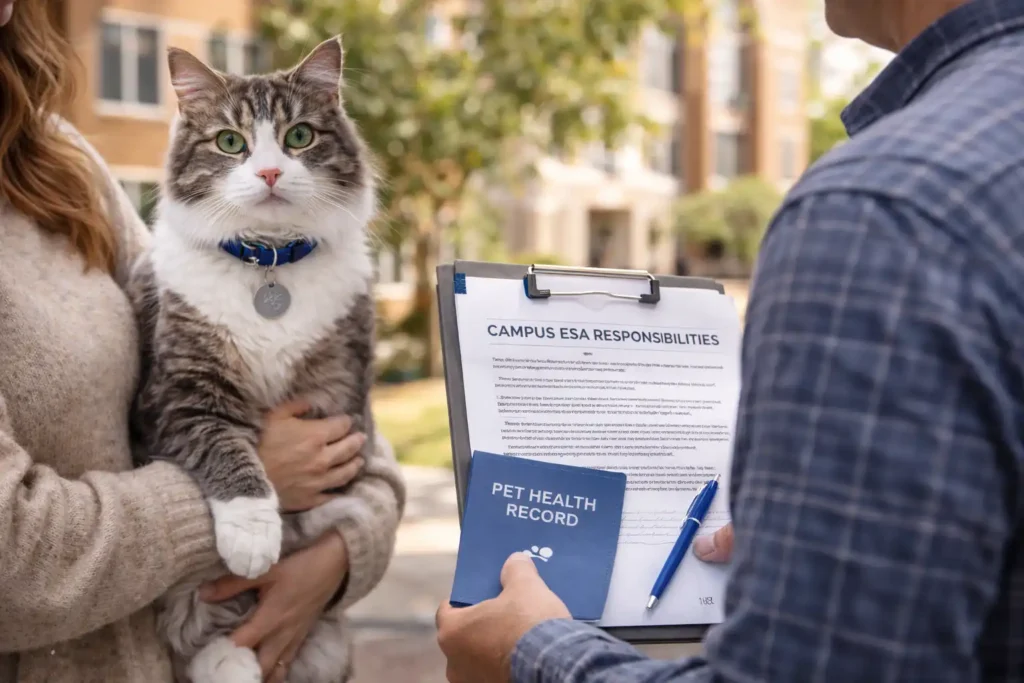
With accommodation comes responsibility, especially when you consider how seriously institutions outline Campus ESA responsibilities in housing policies. I keep my cat healthy, vaccinated, and well groomed. That care reflects respect for both her and others around us.
I also maintain updated documentation. Laws evolve, and staying informed protects both tenant and property owner. If documentation is incomplete or misleading, a landlord can legally challenge the accommodation request.
I learned quickly that being proactive builds trust and reduces friction with landlords and property managers. When I communicate openly, I find that most people are willing to listen. That mutual respect makes a significant difference.
Documentation Standards to Keep in Mind
Your ESA letter must come from a licensed mental health professional who is authorized to practice in your state. In some areas, providers are required to establish a legitimate clinical relationship before issuing a letter, which helps prevent online letter mills.
There is no official national ESA registry. Any website claiming to register your cat in a federal database for a fee is likely selling documents that do not carry legal weight with landlords.
If you are considering this path, make sure you verify your provider’s license and keep copies of your documentation.
If you prefer quick answers, here are the most common questions I hear.
FAQs
1. What qualifies a cat to be an emotional support animal?
A cat qualifies when a licensed mental health professional determines that the animal is necessary as part of treatment for a diagnosed mental or emotional disability. The therapeutic relationship between the owner and the cat is essential.
2. How do I get an ESA letter for my cat?
You must consult with a licensed therapist, psychologist, or psychiatrist. If they determine that an ESA is beneficial, they provide an official letter supporting the accommodation.
3. Are ESA cats allowed in no pet housing?
In many housing situations, landlords must evaluate a reasonable accommodation request when proper documentation is provided.
4. Do ESA cats have airline travel rights?
Most airlines now treat emotional support cats as regular pets. Policies vary, so checking directly with the airline before travel is essential.
5. Can an ESA cat reduce anxiety or depression?
Many individuals report reduced stress and improved emotional stability. While not a cure, companionship can complement professional treatment.
Final Thoughts:
Asking What Is an ESA Cat led me down a path of research, self-reflection, and honest conversations with professionals. The answer turned out to be both legal and deeply personal. It reflects how powerful consistent companionship can be in mental health recovery.
Understanding this role is about more than definitions. It is about acknowledging that emotional support sometimes comes in quiet forms. For me, that quiet form purrs softly at my side and makes difficult days manageable.