


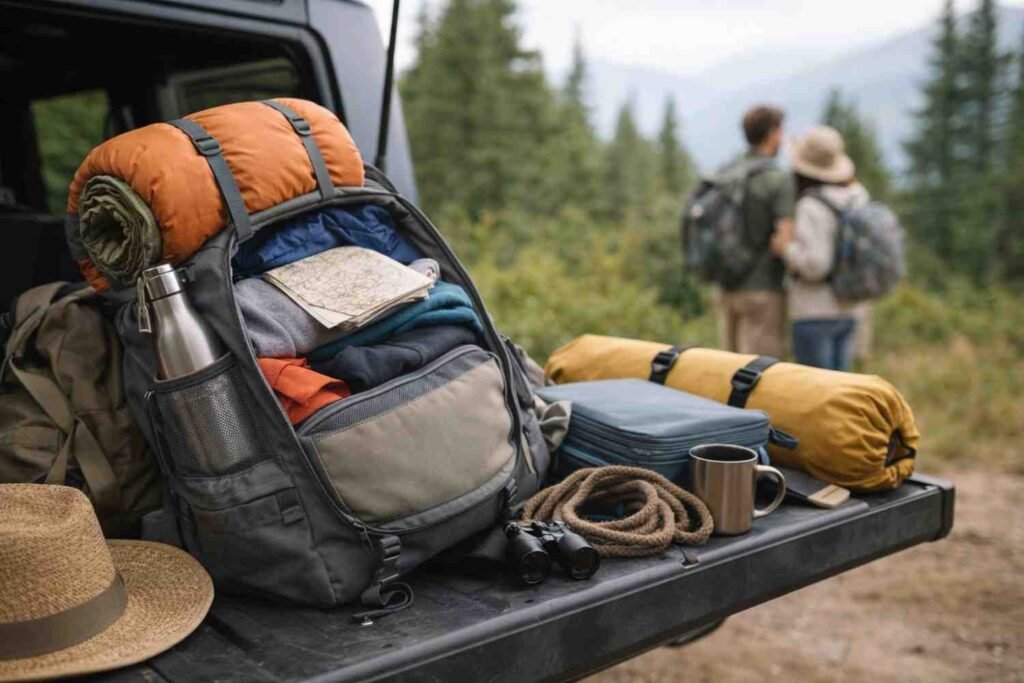
Getting outdoors should be relaxing, but packing can be a logistical nightmare. Proper planning eliminates pre-trip panic. Knowing what to bring and how to pack it frees you up to enjoy the wilderness and ensures you stay safe and comfortable. This guide covers everything from gear selection to maximizing storage, helping you pack efficiently so you can focus on the adventure ahead.
The Essential Gear for Safety and Comfort
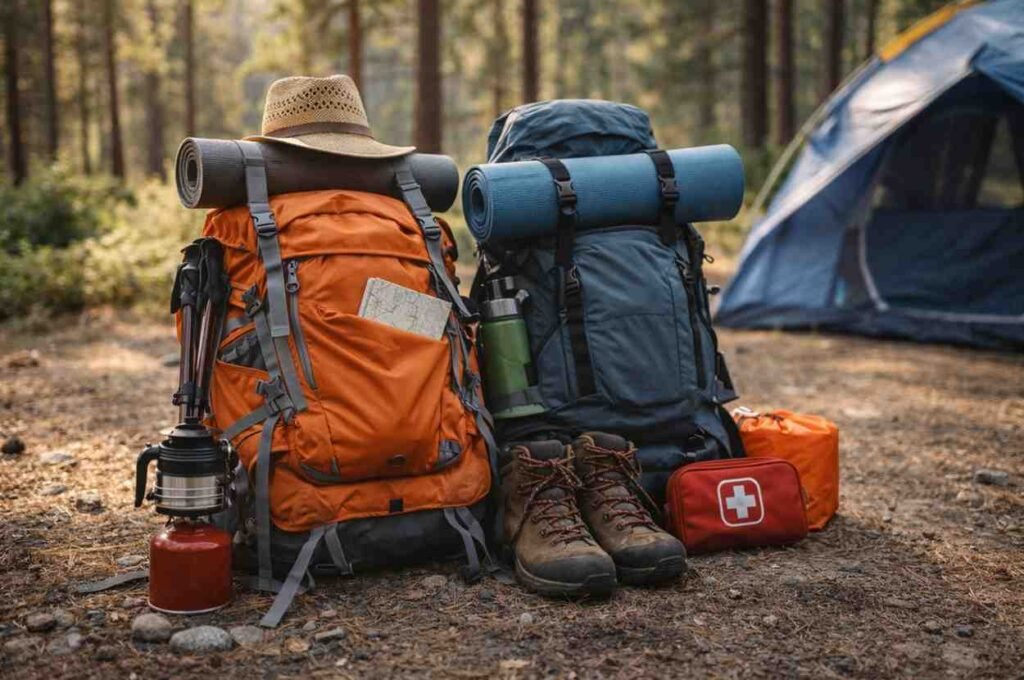
When heading into the wild, your gear is your lifeline. Start with the “Ten Essentials,” a classic checklist that includes navigation tools, sun protection, extra clothing, illumination, first-aid supplies, fire starters, repair kits, extra food, extra water, and emergency shelter.
Your sleep system is equally important. Invest in a quality sleeping bag rated for the expected temperatures and an insulated sleeping pad to keep you warm off the ground.
If you are planning an extended trip or bringing bulky equipment like kayaks or mountain bikes, an aluminum utility trailer in Utah is incredibly helpful. It provides a lightweight, rust-resistant way to haul heavy gear without cluttering your vehicle’s interior. You can easily access your Basecamp essentials while keeping the car comfortable for passengers.
Efficient Packing Techniques
The Zone System
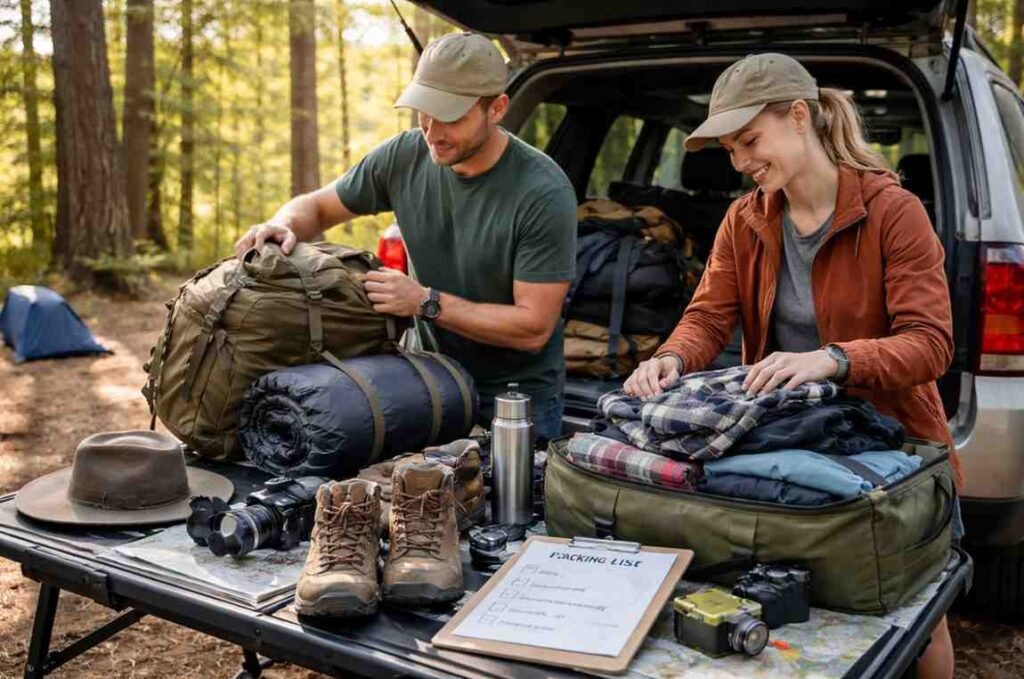
Divide your backpack or vehicle into zones based on accessibility. Items you might need during the day, such as snacks, maps, and rain gear, should sit right at the top of your bag or the trunk of your car. Heavy items like your tent and cooking equipment belong at the bottom or closely secured against the back seat to maintain a low center of gravity.
Use Dry Bags and Packing Cubes
Organization is key to stress-free packing. Dry bags keep your sensitive gear safe from unexpected rainstorms or river crossings, while packing cubes help separate clothing by type or day. Color-coding these bags allows you to find your headlamp or extra socks immediately without tearing apart your entire setup.
Clothing for All Conditions
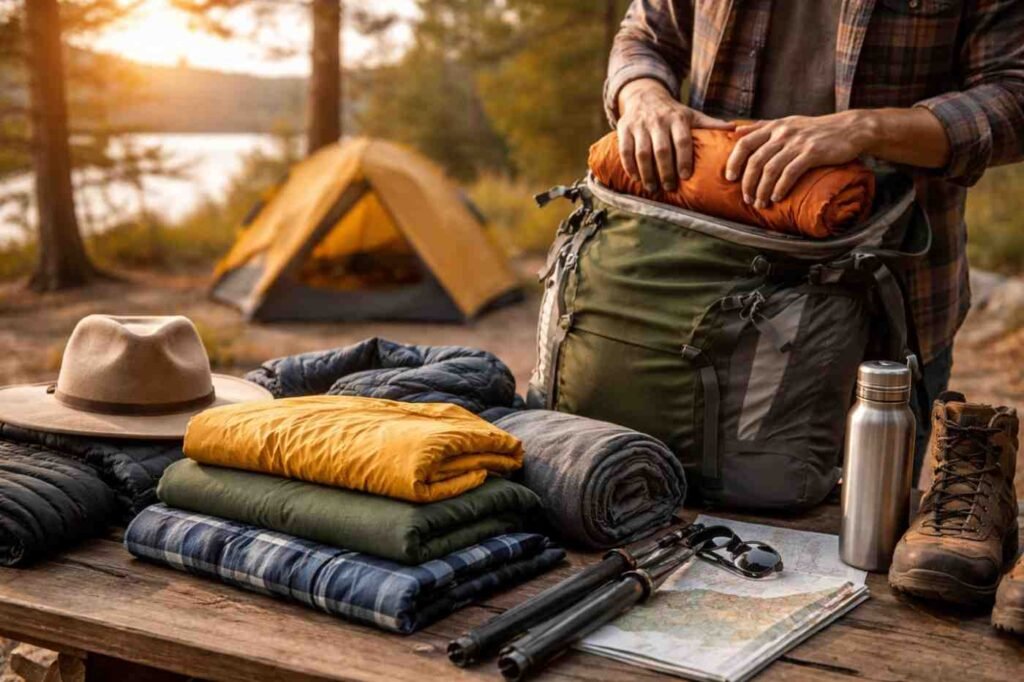
Mother Nature rarely sticks to the forecast. The secret to staying comfortable outdoors is a solid layering system.
Start with a moisture-wicking base layer made of merino wool or synthetic materials to draw sweat away from your skin. Avoid cotton, which traps moisture and makes you cold.
Next, add an insulating mid-layer like a fleece pullover or a down jacket to trap body heat. Finally, top it off with a waterproof and windproof outer shell. This system allows you to easily add or remove clothing as your exertion levels and the outside temperature fluctuate throughout the day.
Food and Hydration Basics
Your body burns a massive amount of calories while hiking and setting up camp. You need meals that provide sustained energy without adding unnecessary weight to your load.
Dehydrated meals and freeze-dried pouches are excellent choices for dinner since they only require boiling water. For lunches and snacks, pack calorie-dense foods like trail mix, jerky, energy bars, and hard cheeses.
Water planning is just as critical to protect yourself on the road. Always carry more water than you think you need. Bring a reliable water filtration system or purification tablets so you can safely refill your bottles from rivers and streams along the trail.
Leave No Trace Guidelines
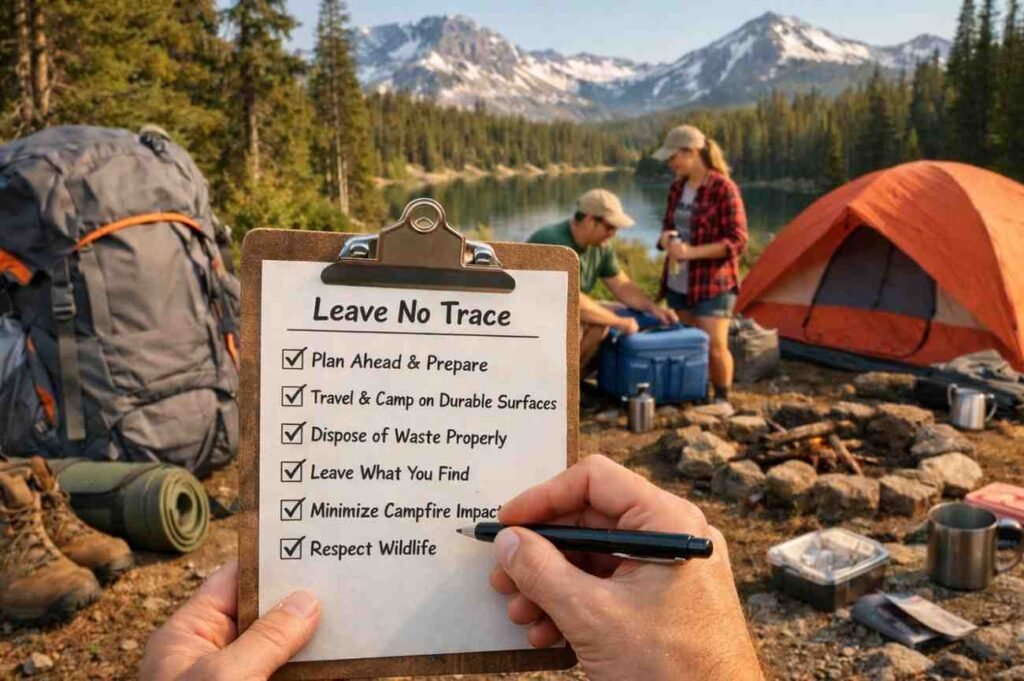
Enjoying the outdoors comes with the responsibility to protect it. The Leave No Trace principles provide a framework for minimizing your impact on the environment.
Always pack out your trash, including food scraps and toilet paper. Stay on designated trails to avoid trampling fragile vegetation. When setting up camp, use established campsites rather than creating new ones. Keep a respectful distance from wildlife, and never feed animals, as this disrupts their natural foraging habits.
Conclusion
Packing for a trip doesn’t have to be a chore. By organizing your gear, preparing for the weather, and planning your meals carefully, you set yourself up for an incredible experience. The time you spend sorting your supplies at home translates directly to peace of mind on the trail.