





There are few things more jarring on a winter morning than stepping out of a warm bed and onto an ice-cold floor. It’s the kind of chill that seeps through your socks and makes you want to crawl right back under the covers. While we often accept this as just a part of the season, consistently cold floors are usually a sign that your home’s envelope isn’t performing as well as it should.
The Usual Suspects: Why Your Floors Are Freezing
When investigating cold floors, the problem usually lies beneath your feet. The relationship between your living space and what is directly under it—whether that’s a basement, a crawl space, or a concrete slab—determines how well your floors retain heat.
Poor Insulation
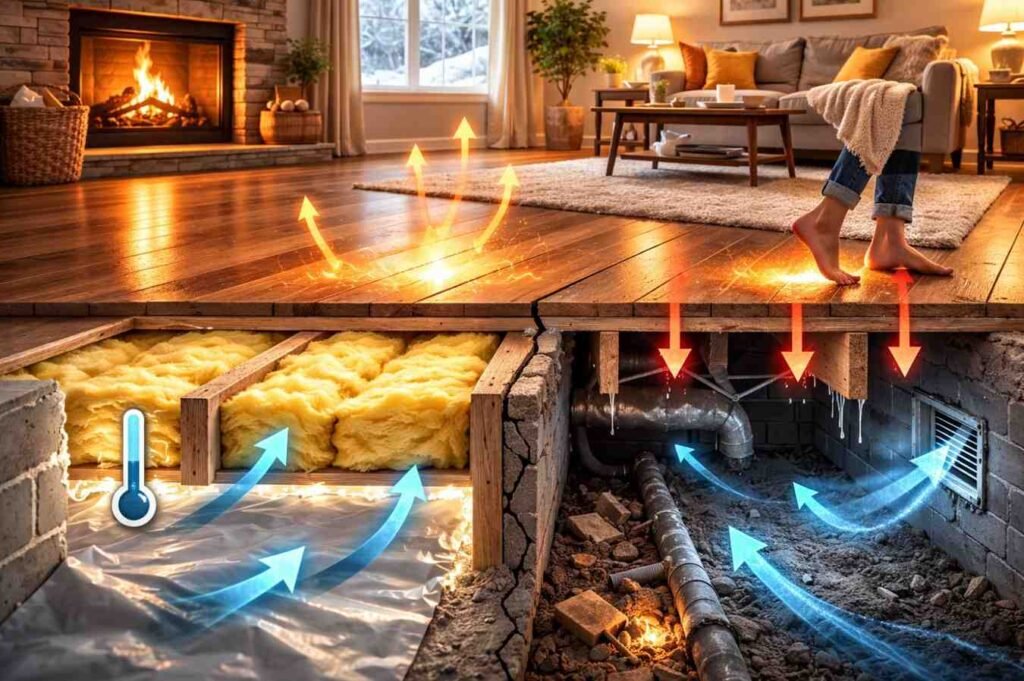
The most common reason for cold floors is inadequate insulation. In many older homes, the floor joists above a crawl space or unheated basement were left completely uninsulated during construction. Even if there is insulation, it might be sagging, wet, or too thin to be effective. When there is no thermal barrier between your warm living room and the freezing air in the crawl space, the heat transfer is rapid. Your floor essentially becomes a large radiator, but instead of radiating heat, it radiates cold.
Air Leaks in Crawl Spaces
Crawl spaces are notorious for being drafty. Vents that are left open in the winter allow freezing outside air to circulate directly underneath your subfloor. Additionally, gaps around plumbing pipes, electrical wiring, and ductwork penetrations can act as gateways for cold air to enter your home. These drafts strip away the heat from the underside of your floors, leaving them cold to the touch regardless of how high you crank the thermostat.
The Science of Cold: Thermal Bridging and the Stack Effect
Beyond simple drafts and missing fiberglass, there are two building science concepts that contribute significantly to cold floors: thermal bridging and the stack effect.
What is Thermal Bridging?
Thermal bridging occurs when a conductive material allows heat to bypass your insulation. In the context of floors, the wooden floor joists themselves can act as thermal bridges. Wood has an R-value (a measure of resistance to heat flow), but it is significantly lower than that of insulation material.
If you have insulation batts stuffed between joists, heat can still travel through the wood joists from the warm interior to the cold crawl space. This creates “stripes” of cold across your floor. While less severe than having no insulation at all, thermal bridging significantly reduces the overall efficiency of your floor assembly.
The Stack Effect
The stack effect refers to the movement of air through a building resulting from temperature differences. Warm air is lighter than cold air, so it rises. In winter, the warm air in your home rises to the upper levels and escapes through leaks in the attic or roof.
This escaping warm air creates a vacuum (negative pressure) at the bottom of your house. To fill this vacuum, cold outside air is sucked in through the lowest points—typically the rim joists, basement windows, and crawl space vents. This constant suction of cold air across your floors keeps them chilled and forces your heating system to constantly fight against the incoming draft.
Quick DIY Fixes for Immediate Relief
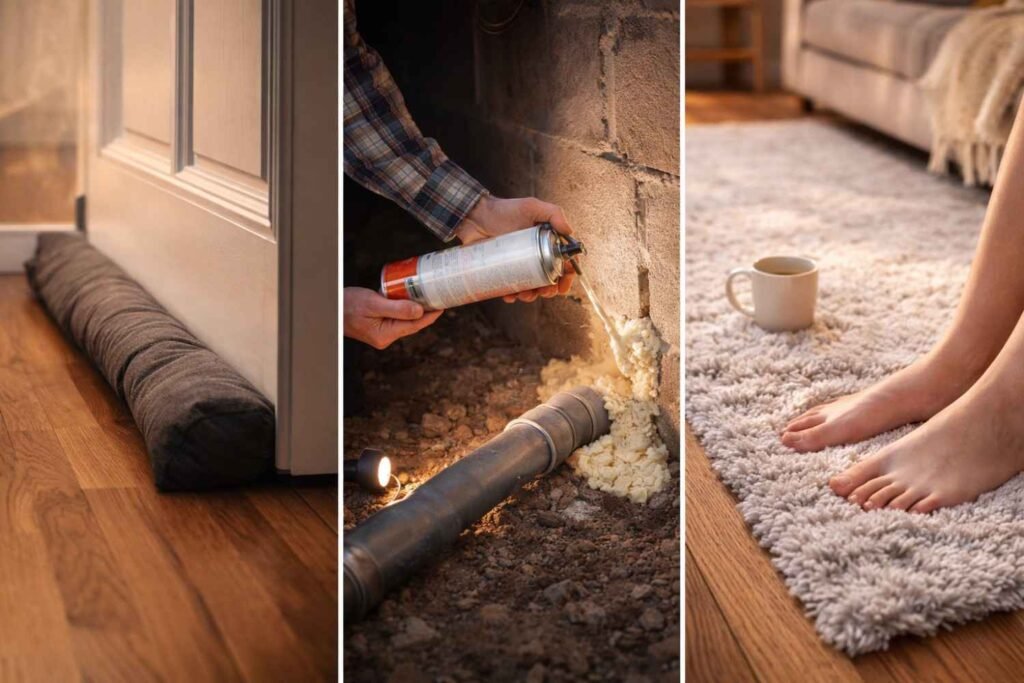
If you aren’t ready for a major renovation but need to warm up your toes today, there are several manageable steps you can take.
Utilize Area Rugs and Carpets
It might seem obvious, but adding layers to your floor is the fastest way to increase comfort. Hardwood, tile, and laminate are conductive materials, meaning they transfer heat away from your feet quickly. A thick area rug with a high-quality pad acts as an insulator. It creates a barrier that prevents your body heat from being sapped by the cold floor and stops drafts from rising through cracks in older floorboards.
Seal Visible Gaps
Grab a tube of silicone caulk or a can of expanding spray foam and head down to the basement or crawl space (if it’s accessible). Look for the places where pipes, wires, and ducts penetrate the floor. These holes are often cut much larger than necessary, leaving wide gaps for air to flow through. Sealing these penetrations stops the direct infiltration of cold air.
Draft Stoppers
If you have doors leading to an unheated basement or garage, check the bottom threshold. If you can see light coming through, cold air is definitely getting in. Installing a simple door sweep or using a weighted draft stopper can make a surprising difference in the temperature of the floor near that entryway.
Long-Term Professional Solutions
For a permanent solution that improves the value and efficiency of your home, you may need to call in the experts. These methods address the root causes rather than just masking the symptoms.
Subfloor Insulation
Professional insulation services in West Haven can drastically improve comfort. The approach depends on your specific foundation type:
- For Crawl Spaces: Encapsulation is often the gold standard. This involves sealing the vents, lining the floor and walls with a heavy-duty vapor barrier, and insulating the foundation walls rather than the subfloor. This turns the crawl space into a semi-conditioned space, keeping it much closer to the temperature of the living area.
- For Unheated Basements: Spray foam insulation applied to the rim joists (where the house frame meets the foundation) and the underside of the subfloor provides an excellent air seal and thermal barrier. Unlike fiberglass batts, spray foam won’t sag or absorb moisture over time.
HVAC Duct Sealing and Insulation
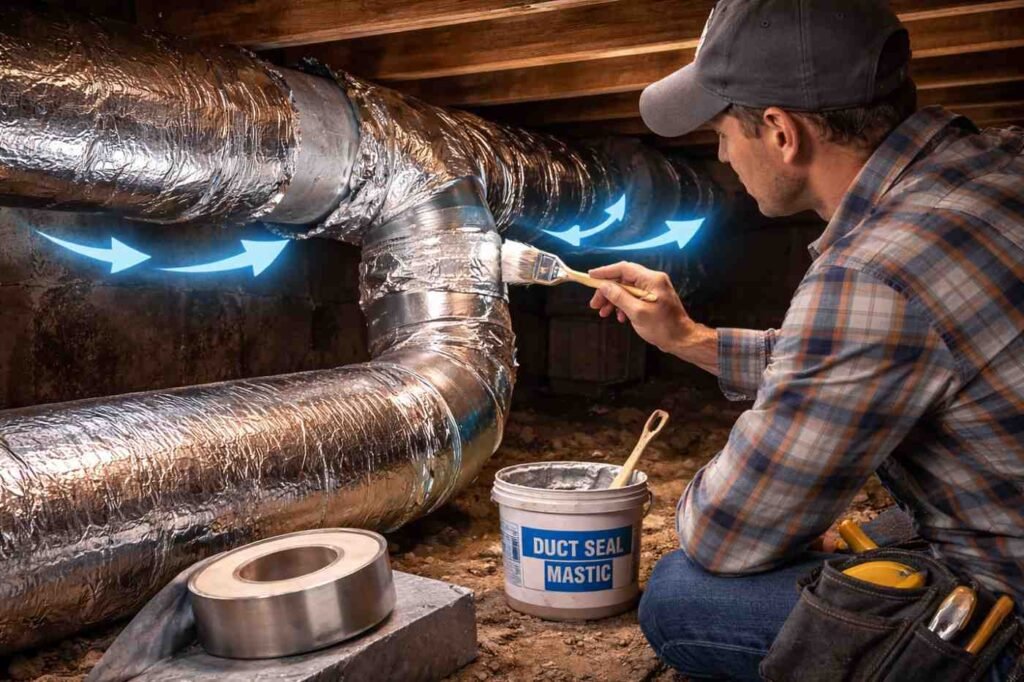
If your heating ducts run through a cold crawl space or basement, they are losing heat before it ever reaches your rooms. Leaky ducts can lose up to 30% of their airflow. A professional can seal these ducts using mastic or metal tape and wrap them in insulation. This ensures that the hot air you pay for actually heats your home, and it prevents the ducts from cooling down the surrounding space.
Radiant Floor Heating
If you are planning a remodel, consider radiant floor heating as the ultimate solution. This system installs electric mats or hot water tubes underneath your finished floor. Instead of blowing hot air into a room that quickly rises to the ceiling, radiant heating warms the floor itself. The heat radiates upward, warming objects and people in the room evenly. It is highly efficient and eliminates the “cold feet” problem.
Comfort and Efficiency Go Hand in Hand
Addressing cold floors is about more than just comfort; it’s a smart financial move. When your floors are poorly insulated or leaky, your furnace or heat pump cycles on more frequently and runs for longer periods to maintain the set temperature. This increases equipment wear and tear and drives up energy costs.
By sealing air leaks and improving insulation, you reduce the heating load on your home. You’ll notice that rooms stay warmer for longer after the heat turns off, and the temperature is more consistent from floor to ceiling. Over time, the savings on your monthly utility bills can help offset the cost of the improvements.
Conclusion
You don’t have to resign yourself to wearing three pairs of socks until spring. Cold floors are a solvable building performance issue. Whether you start with simple draft blocking or invest in professional crawl space encapsulation, every step you take improves your home’s thermal envelope. A warmer floor leads to a more comfortable home, a happier family, and a healthier bank account.