


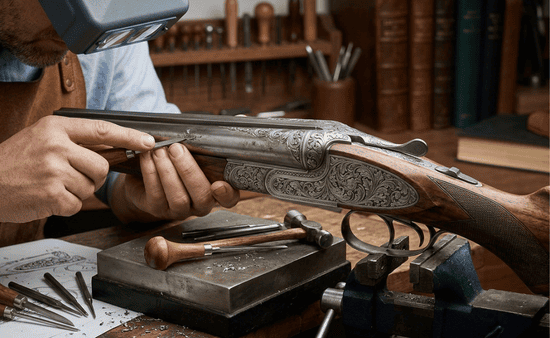
The details added to a firearm after it leaves the factory often say more about its significance than the platform itself. Whether the work is minimal or elaborate, understanding what goes into it helps you make decisions you won’t regret once the graver has touched metal.
The History Behind the Craft
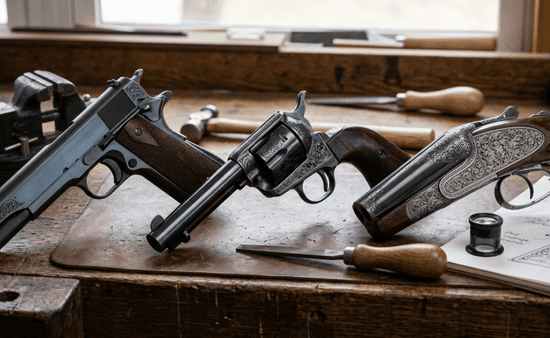
Firearm engraving has been practiced for as long as quality firearms have been made. European guild traditions, American frontier craftsmanship, and military presentation customs all contributed to a body of technique and design vocabulary that serious engravers still draw from today.
That history matters in practical terms because it means the craft has well-established standards — for line quality, layout, design proportion, and how decorative elements should relate to the geometry of the platform. An engraver who understands that tradition produces work that feels intentional. One who doesn’t tends to produce work that looks applied rather than integrated.
Surface Coverage and How It Affects the Overall Look
One of the first decisions in any engraving project is how much of the firearm’s surface the work will cover. Quarter coverage, half coverage, and full coverage each produce a fundamentally different visual result — and each requires a different level of planning to execute well.
Less coverage isn’t necessarily simpler. A small, well-placed design on an otherwise clean surface draws more attention to itself than the same design surrounded by competing elements. The negative space around an engraved panel is part of the composition, and how that space is managed is one of the things that distinguishes considered design from work that was sized to fit a budget rather than the piece.
Choosing a Design That Fits the Firearm
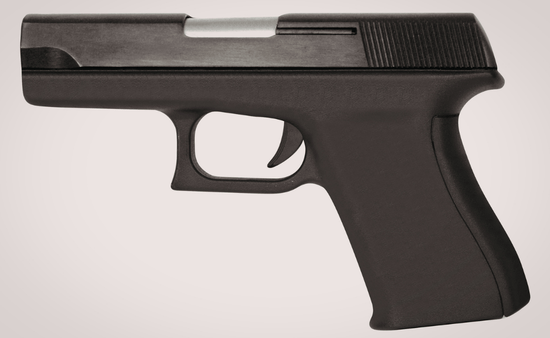
Custom gun engraving begins with a design that’s developed specifically for the platform being worked on — not adapted from a template and scaled to fit. The curvature of a receiver, the width of a barrel flat, the geometry of a grip frame all affect what designs will read clearly and which will become visually confused once cut.
Scrollwork is the most traditional and versatile design category — it adapts to irregular surfaces, can be scaled across coverage levels, and provides a backdrop for pictorial elements like game scenes, portraits, or emblems. Geometric patterns offer a different aesthetic, more structured and formal.
Lettering and monograms require their own set of spacing and proportion considerations that are separate from decorative work. A craftsman worth working with will have opinions about which approach suits the piece and will explain why.
The Role of Metal Hardness in the Process
Not all metals engrave the same way, and the alloy composition of a firearm’s components affects how the work is approached and what’s achievable. Soft metals like aluminum accept cuts easily but also show wear faster. Case-hardened steel requires more force and more deliberate tool management.
Stainless steel is particularly demanding — it work-hardens as the graver moves through it, which affects cut quality if the craftsman isn’t experienced with the material.
Before committing to a design, an experienced engraver will assess the metal composition of each component being worked on and adjust their approach accordingly. Attempting the same technique on materials with different hardness profiles is one of the ways engraving work goes wrong, and it’s a variable the customer rarely sees unless they know to ask about it.
Protecting the Work After It’s Done
Engraved metal is more vulnerable to certain types of wear than unworked metal because the cuts create surface texture that can trap moisture and cleaning solvents if not properly managed. How the engraving is finished — whether it’s left bright, blued, case-colored, or protected with a light coat — affects both the appearance and the longevity of the work.
This is a conversation worth having with the craftsman before work begins, not after. Some finishes complement engraving better than others, and the choice affects how the cuts read visually — bright engraving on a blued background produces a different effect than matching finishes, and neither is universally correct.
The right choice depends on the intended use of the firearm and how it will be stored and displayed.
Verifying Quality Before Accepting the Work
When a finished piece comes back, the inspection before acceptance matters. Quality engraving has consistent line depth across equivalent cuts, clean entry and exit points without burrs or chatter marks, and background work — if present — that’s even in texture and depth across the entire field.
Design elements should be centered and proportioned correctly relative to the surface they occupy. Borders should be parallel to edges where geometry allows. Lettering should have consistent spacing and baseline alignment. These aren’t subjective preferences — they’re craft standards that distinguish careful work from rushed work, and they’re visible on close inspection even to someone who isn’t an expert.
Conclusion
A well-engraved firearm carries the mark of a craftsman’s time and skill in a way that holds up across decades. Approaching the process with the same care the craftsman brings to the work — choosing thoughtfully, communicating clearly, and inspecting thoroughly — is what leads to a result worth keeping.